
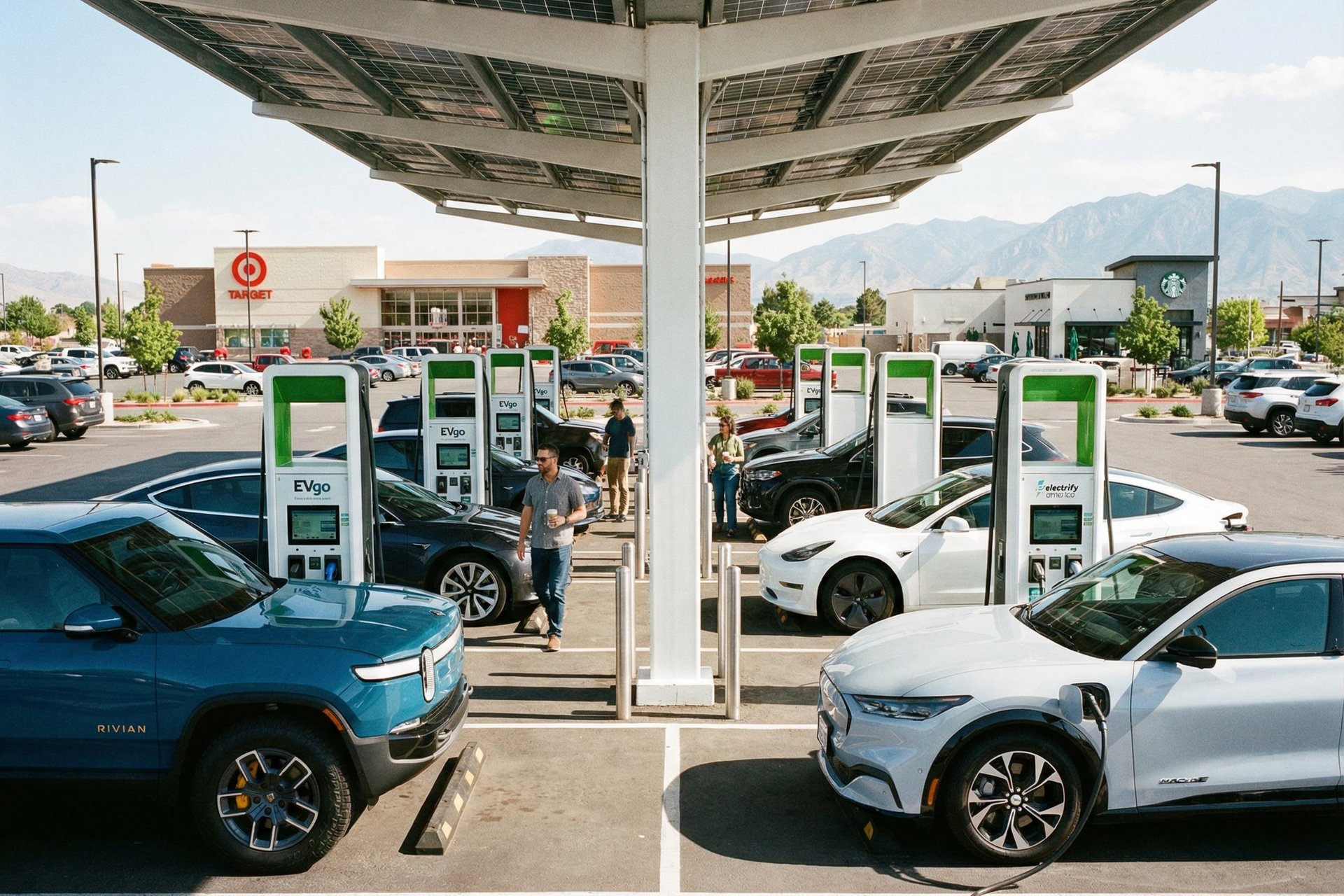

As consumers grapple with rising gas prices and the loss of the $7,500 U.S. tax credit for plug-in and hybrid models, 31 states and Washington, D.C. have seen dips in the number of electric vehicle registrations. But 10 states still have EV registration rates above 10 percent, according to new data released by the Alliance for Automotive Innovation.
The Alliance, which lobbies in Washington for nearly all major carmakers including General Motors, Toyota and Volkswagen, said in its quarterly Get Connected report that EVs represented 9.6% of U.S. auto sales in 2025, which was a 0.6% decrease from 2024 levels. In the three months after the end of the federal tax credit, EV sales represented just 6.5% percent of total U.S. auto sales, which was down from 10% from the same period in 2024, when drivers still had access to the $7,500 credit.
“As the industry transitions into this new phase, 2026 is shaping up to be a period of recalibration,” the group said in latest report. “Demand patterns are normalizing, manufacturers are adjusting production and pricing strategies, and the market is responding to evolving policy and economic conditions.”
The findings came as the average price of gas reached $3.99 on March 30, according to the AAA Auto Club. That’s up from a national average gas price of $2.98 on February 28. It also comes as data from Carmax shows that searches for electric vehicles and hybrids on its platforms increased by 12.8 percent between March 2 and March 22 compared to February 1 to March 1.
The USA TODAY Cars team took a look at the states that had the biggest EV adoption rates going into 2026.
1. California
2025 EV percentage: 23.9%
Change from 2024: -2.29%
What they said: The California Department says in a post on its website “as the steward of California’s state highway system, Caltrans serves an important and unique role in the state’s efforts to increase zero-emission vehicles (ZEVs) on California’s roadways.
2. Colorado
2025 EV percentage: 19.9%
Change from 2024: -2.74%
What they said: The Colorado Department of Transportation says in a post on its website that it expects to receive $57 million from the federal government to create an EV charging network across the state.
3. Washington, D.C.
2025 EV percentage: 19%
Change from 2024: -0.92%
What they said: The Washington, D.C. Department of Transportation says in a post on its website “sustainability is a top priority for the District, and the switch to electric vehicles complements many existing District sustainability goals and initiatives that look to electrification to reduce greenhouse gas (GHG) emissions in the District as the city seeks to be carbon neutral and climate resilient by 2050.”
4. Washington
2025 EV percentage: 19%
Change from 2024: -2.02%
What they said: The Washington Department of Transportation says in a post on its website “accelerated adoption of electric vehicles is integral to reducing the transportation sector’s emissions and advancing the state’s emission reduction goals.”
5. Nevada
2025 EV percentage: 16.2%
Change from 2024: 1.18%
What they said: The Nevada Department of Transportation says in a post on its website that it is planning to spend $38 million in federal money on EV chargers.
6. Oregon
2025 EV percentage: 15.5%
Change from 2024: -0.54%
What they said: The Oregon Department of Transportation says in a post on its website “electrifying our transportation system is a key strategy to reduce greenhouse gas emissions and move Oregon towards a cleaner future.”
7. New Jersey
2025 EV percentage: 12.2%
Change from 2024: -1.82%
What they said: The New Jersey Department of Environmental Protection says in a post on its website “on New Jersey, transportation is the number one source of greenhouse gas pollution. The 2023 ozone projection inventory reflects that cars and trucks account for about 21% of the manmade VOC plus oxides of nitrogen emissions in the air that contribute to the formation of ground-level ozone or ‘smog’ during the summer months. Your choice to drive electric improves New Jersey’s air quality and helps slow climate change.”
8. Hawaii
2025 EV percentage: 10.8%
Change from 2024: -2.86%
What they said: Hawaii said in a post on its website after implementing a road use charge that covered both gas-powered and electric car drivers “as more drivers in Hawaiʻi choose more fuel-efficient, hybrid, or all-electric vehicles, revenues from motor fuel taxes and other vehicle registration fees have declined, resulting in less funding to maintain Hawaiʻi’s roads, bridges and infrastructure.”
9. Massachusetts
2025 EV percentage: 10.6%
Change from 2024: -1.73%
What they said: The Massachusetts Department of Transportation says in a post on its website “addressing emissions from the transportation sector through vehicle electrification is essential to mitigating the worst impacts of climate change while creating a clean, affordable, and resilient transportation future for Massachusetts.”
10. Connecticut
2025 EV percentage: 10.4%
Change from 2024: -1.06%
What they said: The Connecticut Department of Transportation says in a post on its website “wide-scale EV deployment is among the primary solutions for achieving the state’s statutorily required economy-wide greenhouse gas (GHG) reduction targets of 45 percent and 80 percent below 2001 levels by 2030 and 2050, respectively.”
This article originally appeared on USA TODAY: These 10 states have the most EVs entering 2026. Is yours among them?
Reporting by Keith Laing, USA TODAY / USA TODAY
USA TODAY Network via Reuters Connect
Read the full article here