

Reaching your 80s doesn’t automatically mean saying goodbye to income taxes. Many retirees live on fixed incomes and may owe little or nothing to the IRS. However, others with pensions, investment income or retirement withdrawals may still face tax obligations. The key to understanding your tax situation in your later years lies in knowing which income sources are taxable.
A financial advisor who specializes in tax planning can help you develop a strategy to manage your liability in your 80s.
When Do Seniors Not Have to Pay Income Tax?
Whether a senior must file a return depends on their gross income and filing status. For example, a single senior age 65 or older generally does not need to file a federal return unless their income exceeds a specific threshold. This changes every year, amounting to $16,100 in 2026 (up from $15,700 in 2025). Married couples filing jointly can typically earn up to $32,200 in 2026 ($31,500 in 2025) if both spouses are over 65 before they’re required to file. If total income, including Social Security, pensions and investment earnings, falls below those levels, no income tax is owed.
For many retirees, Social Security benefits make up a significant portion of income. The good news is that these benefits aren’t always taxable.
Instead, the IRS uses a formula called combined income. This includes half of your Social Security benefits, plus other income, such as pensions or withdrawals from retirement accounts. If your combined income stays below $25,000 for single filers or $32,000 for joint filers, your Social Security benefits remain tax-free. As a result, seniors living primarily on Social Security often owe little or nothing in federal income tax.
It’s also important to remember that not all states tax retirement income the same way. Some states, such as Florida and Texas, have no state income tax at all. Others may exempt Social Security benefits or certain types of retirement income.
Seniors who live in or move to a tax-friendly state may find additional relief from state-level taxes. This can help further reduce their overall tax liability.
At What Age Is Social Security No Longer Taxed?

There isn’t a specific age when Social Security benefits automatically become tax-free. Whether you owe taxes on your benefits depends entirely on your overall income, not your age. Even at 80 or beyond, seniors may still be required to pay taxes on a portion of their Social Security. It all depends on whether their income from other sources, such as pensions, investments and part-time work, exceeds IRS thresholds.
The IRS uses your combined income to determine what taxes you owe on Social Security. This figure adds together your adjusted gross income (AGI), any nontaxable interest (like from municipal bonds) and half of your Social Security benefits.
For seniors whose sole income is from Social Security, none of their benefits may be taxed if their combined income stays below the IRS thresholds. Many retirees with modest savings or limited income sources may find that once they stop withdrawing from traditional retirement accounts or earning wages, their Social Security benefits become completely tax-free, regardless of their age.
When Do You Include Social Security in Your Gross Income for Taxes?
You only include Social Security benefits in your gross income if your total income exceeds certain IRS thresholds. For many retirees, these benefits aren’t taxable at all.
However, if your combined income rises above specific limits, a portion of your benefits must be included on your tax return. You need to check the current tax bracket to know when you must file.
Even if you rely primarily on Social Security, additional income can quickly push you above these thresholds. Withdrawals from traditional IRAs or 401(k)s all count toward your combined income. Also eligible are pensions, dividends and even part-time earnings.
Because of this, many retirees who take distributions from pre-tax accounts may end up paying tax on a portion of their Social Security, even if their overall income feels modest.
Tips for Filing Taxes in Retirement
Filing taxes in retirement can be simpler than during your working years. However, it still requires careful planning to avoid unnecessary taxes and missed deductions. Even if your income is lower, your mix of Social Security, retirement account withdrawals and investments can make your return more complex. These practical tips can help retirees stay organized while potentially reducing their overall tax liability.
- Research filing requirements. Even after you have retired, you may still need to file a tax return. This ultimately will depend on your income level and filing status. The IRS adjusts tax filing thresholds for seniors each year. Therefore, it’s important to verify whether your income, including taxable Social Security and investment earnings, requires you to file.
- Use higher standard deductions. Seniors 65 and older qualify for a larger standard deduction, which can reduce taxable income. For 2025, this equals an extra $2,000 for single filers and $1,600 per spouse for married couples filing jointly, potentially eliminating the need to itemize. Beginning in 2026 through 2028, those 65 and older can also claim an additional $6,000 annual deduction on their taxes.
- Plan retirement withdrawals strategically. How and when you withdraw money from IRAs or 401(k)s can affect your tax bracket and the taxation of your Social Security benefits. Spreading withdrawals over multiple years or tapping Roth accounts can help minimize your annual tax burden.
- Beware of required minimum distributions (RMDs). Once you reach age 73, you must start taking RMDs from most retirement accounts. Failing to do so can lead to steep IRS penalties of up to 25% of the amount you should have withdrawn.
- Don’t forget about state taxes. Not all states treat retirement income the same way. Some don’t tax Social Security or have no income tax at all, while others tax pensions or IRA withdrawals. Knowing your state’s rules can help you plan where and how to draw your income efficiently.
- Consult a professional. Retirement taxes involve multiple moving parts, from Social Security to RMDs and investment income. A financial advisor can help you identify deductions and optimize withdrawals to ensure you’re not paying more than necessary.
Bottom Line
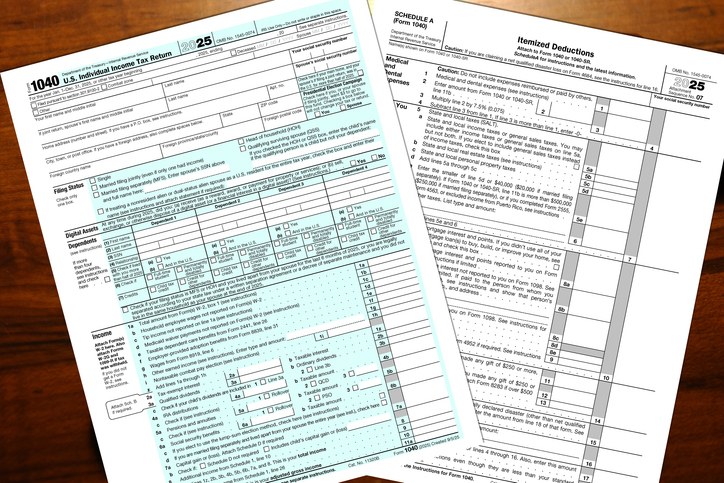
Even after age 80, taxes can still play a major role in managing retirement income. Many seniors qualify for higher deductions and may owe little or nothing depending on their income mix. Therefore, understanding when Social Security and other benefits become taxable is essential to avoiding surprises. With the right planning, from timing withdrawals to leveraging tax-free income sources, retirees can minimize taxes and make their savings last longer.
Retirement Tax Planning Tips
- If you’re unsure how much you’ll owe in taxes, a financial advisor can help you calculate your liability to avoid costly mistakes. Finding a financial advisor doesn’t have to be hard. SmartAsset’s free tool matches you with vetted financial advisors who serve your area, and you can have a free introductory call with your advisor matches to decide which one you feel is right for you. If you’re ready to find an advisor who can help you achieve your financial goals, get started now.
- SmartAsset’s Social Security calculator can help you estimate future monthly government benefits.
Photo credit: ©iStock.com/phakphum patjangkata, ©iStock.com/Ridofranz, ©iStock.com/Larry_Reynolds
Read the full article here